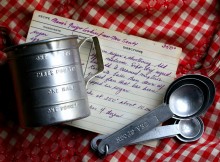
Can you patent a recipe? Maybe. It depends.
Parts of recipes could be patentable — to receive patent protection, the invention has to be useful, novel, and nonobvious. Given how frequently food is prepared, Grandma’s 7-Layer Bar is probably not patentable.
But that’s not to say recipes cannot receive any intellectual property protection. The name of a food might be trademarked (like “lunchable”) and the exact way that the recipe is worded and fixed on the page could be copyrightable. And a company might protect a recipe as a trade secret (i.e., the recipe for Dr. Pepper).
For more:
- Berne Convention (on the mostly unenforceable international moral right to attribution)
- 35 U.S.C. § 101 (useful)
- 35 U.S.C. § 102 (novel)
- 35 U.S.C. § 103 (nonobvious)
- United States Patent Code, Patent Class 426 – Food Or Edible Material or Cooperative Patent Classification Section A (Human Necessities), Subsection A (Agriculture)
- U.S. Patent and Trade Office, Inventor’s Eye, Supervisory Patent Examiner Larry Tarazano contributing, Can Recipes be Patented? (Jun. 2013, vol. 4, no .3)
- Sealed crustless sandwich, United States Patent 6004596
- Gene Quinn, IPWatchdog, The Law of Recipes: Are Recipes Patentable? (Feb. 10, 2012)
- Adam Liaw, The Wall Street Journal Food and Drink Blog, Why You Can’t ‘Own’ a Recipe (Oct. 2, 2013)
- For an example of food names and trademark issues, see Ramy Inocencio, The Wall Street Journal Food and Drink Blog, Don’t Call It a Cronut in Hong Kong (Aug. 15, 2013)
- See also
- Wikihow, How to Patent a Recipe
- Mark Levy, Inventorprise Incorporated, Can I Patent a Food Recipe?
Image courtesy Liz West
 The Law in Life