
 |
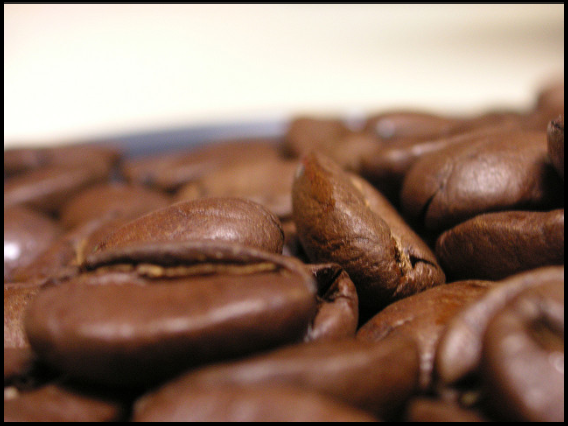
| Image courtesy mikepetrucci. |
Does the law help you know if it’s legit?
A whole patchwork of antitrust, taxation, and food laws and regulations governs coffee imports. Since 1996, import marking laws have specifically exempted coffee from the requirement that a product be labeled with its country of origin.
In 1992, the Hawaiian legislature passed a law requiring that coffee sold as “Kona” coffee in Hawaii contain at least 10% of Kona coffee. Why just 10%? Blending is probably the best way for Kona coffee to get itself sold, since it is rare and expensive.
But this Hawaiian law has no effect anywhere but Hawaii. On the mainland, you could buy a coffee blend labeled “Kona” that contained exactly 0% of Kona coffee.
Or so Michael Norton, executive of Kona Kai Farms in Berkeley, CA, probably thought. For several years, Kona Kai Farms packaged an inferior blend of Central American coffees and sold it as “Kona.”
In 1997, a group of Kona farmers sued Kona Kai Farms (alongside various retailers like Starbucks and Peet’s who sold Kona Kai products) in a civil class action suit. The parties settled in 1999. Kona Kai Farms agreed to pay $1 million to 650 Kona growers and the retailers agreed to buy coffee from REAL Kona growers for several years. Meanwhile, the United States charged Norton with wire fraud and tax evasion. He pleaded guilty and was sentenced to 30 months in prison by a district judge.
Today, “100% Kona Coffee” and “100% Hawaiian Coffee” are registered U.S. marks with the Patent and Trademark Office.
But as to what percentage of Kona is in that coffee you’re drinking? Your guess is as good as mine.
For more:
- Report to the Twenty-Fifth Legislature, Regular Session of 2009, Report on Hawaii-Grown Coffee Labeling and Inspection, And Economic Impact of Potential Changes to Minimum Content Requirements, In Response to Senate Concurrent Resolution (SCR) 102, 2007 Legislature, Prepared by the State of Hawaii Department of Agriculture (February 2009)
- Haw. Rev. Stat. § 486-120.6 : Hawaii Statutes – Section 486-120.6: Hawaii-grown roasted or instant coffee; labeling requirements.
- Debra Barayuga, Honolulu Star-Bulletin, Kona coffee farmers win fake-bean suit Cheap coffee had been repackaged as expensive Kona beans for years (Sept. 29. 1999).
- Bruce Dunford, Counterfeit Kona Bean Case Settled, Washington Post (AP), (Sept. 30, 1999).
- Tea & Coffee, The Kono Kai Scandal and its Aftermath (Apr. 2001).
- Jennifer Sinco Kelleher, Bloomberg Businessweek News, AP News, Kona coffee industry at odds over new Hawaii law (Jul. 19, 2012).
- Jennifer Sinco Kelleher, Huffington Post, Kona Coffee Labeling: Farmers Request More (Jan. 5, 2012).
- Coffee, instant coffee, and coffee preparations are classified in either chapter 9 or chapter 21 of the Harmonized Tariff Schedule of the United States (HTSUS), e.g. 0901.11.00. (website down during shutdown)
- The Marking Statute – Tariff Act of 1930 Section 304, as amended (19 USC 1304) (an article of foreign origin must be conspicuously marked to indicate the country of origin); Customs Regulations, 19 CFR 134.41(b) — conspicuous means the ultimate purchaser can read the country of origin marking easily and without strain; Miscellaneous Trade and Technical Corrections Act of 1996, Pub. L. 104-295, 110 Stat. 3514. Section 14 (exempting coffee from the country of origin marking requirement)
- Cheryl K. Chumley, Washington Times, Coffee police call for more regulation of caffeine (Feb. 26, 2013).
- Alexis Rubinstein, Tea and Coffee Trade Online, Kona Coffee Part II: What Works and What Doesn’t (June 2008)
- U.S. Department of Homeland Security, Customs and Border Protection, What Every Member of the Trade Community Should Know About Coffee (Aug. 2006).
- Peter Fimrite, SFGate, U.S. Coffee Laws Don’t Filter Out Fraud (Nov. 14, 1996).
- Scott Bradley Weese, International Coffee Regulation: A Comparison of the International Coffee Organization and the Fair Trade Coffee Regimes, Cardozo Public Law, Policy and Ethics Journal, Vol. 7, No. 275 (Dec. 1, 2008).
- Jim Chen, Agricultural Law, Coffee and the Law (Nov. 15, 2007).
- National Coffee Association
- Kona Coffee Farmers Association, Legislative Objectives
- Red Lion Reports, Coffee and the Law (Nov. 15, 2007).
- Carol Robertson, The Little Book of Coffee Law, American Bar Association: 2011.
- James Ming Chen, Around the World in Eighty Centiliters, Minnesota Legal Studies Research Paper No. 05-28; Minnesota Journal of International Law, Vol. 15, p. 11, 2006. (“A simple carafe of coffee, with cream and sugar on the side, vividly illustrates the tradeoff between comparative advantage and redistributive goals in the formation of trade policies.”)
- MiShorts, Sixty Cups of Coffee – Could Drinking Coffee be Against the Law? (YouTube)
 The Law in Life