
Back in the day, mattresses came stuffed with nasty stuff.
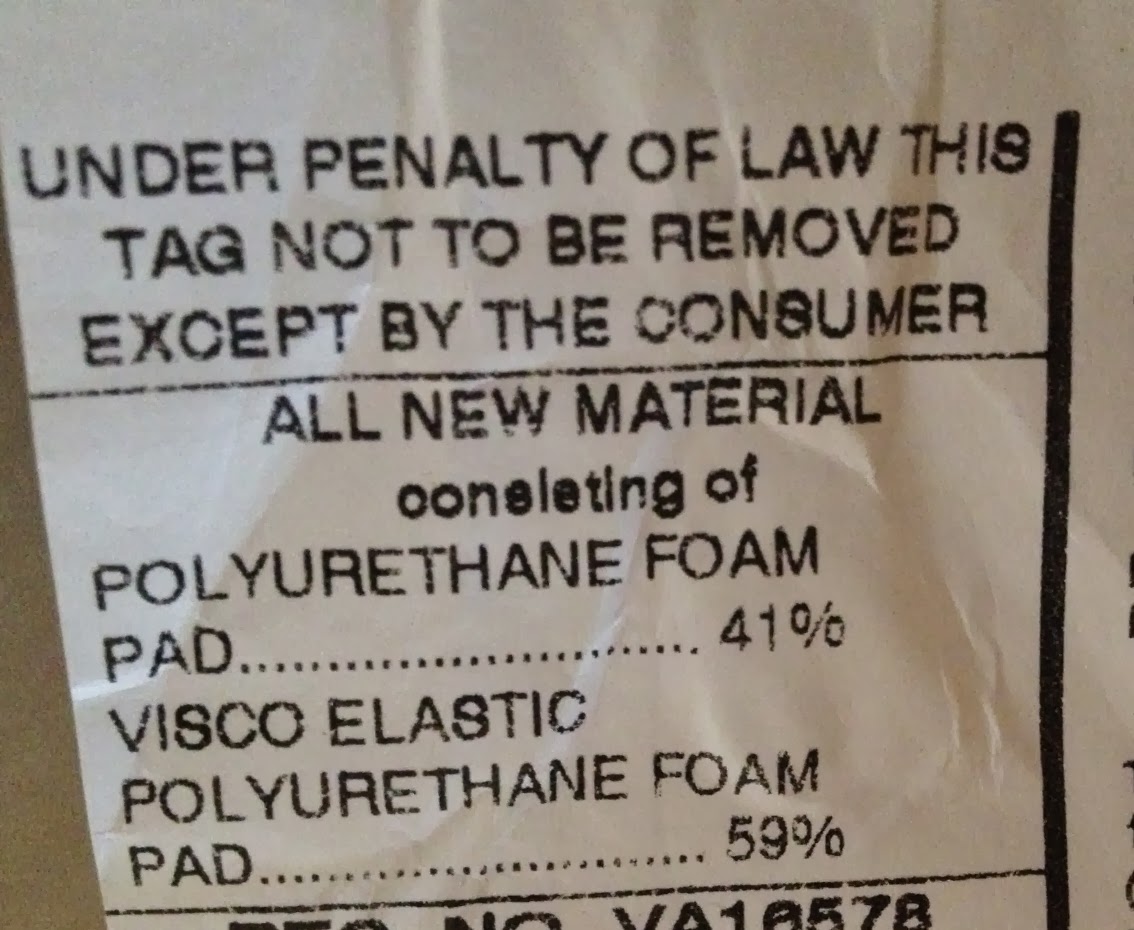 |
| Not my modern mattress! All new material, baby. |
Secondhand stuffing could carry contaminants: lice, bedbugs, chemicals, you name it. Gross.
So many states, pursuant to their police powers to regulate the health, safety, and welfare of their citizens, passed bedding labeling laws to inform consumers whether their bedding was made from new or recycled materials.
Thanks to the “except by the consumer” language, you are free to remove the tag yourself. However, some mattress manufacturers require the “law tag” to be included in a warranty claim.
Somebody should get Mickey Morelli a lawyer. He’s a wrongly convicted man.
For more:
- Weaver v. Palmer Brothers Co., 270 U.S. 402 (1926) (Google Scholar) (about a Pennsylvania law requiring secondhand “shoddy” to be sterilized. Shoddy, kind of like it sounds, is “any material which has been spun into yarn, knit or woven into fabric, and subsequently cut up, torn up, broken up, or ground up”).
- Laura Northrop, Warning: Actual Consequences To Removing Mattress Tags, Consumerist (Oct. 9, 2009).
- Delaware Code, TITLE 16 Health and Safety, Regulatory Provisions Concerning Public Health >> CHAPTER 21. MATTRESSES, PILLOWS AND BEDDING >> § 2101. Definitions.
- American Law Label, Inc., What is a Law Label?
 The Law in Life