
Why do some states limit the alcohol by volume (or “% ABV”) of certain types of alcohol?
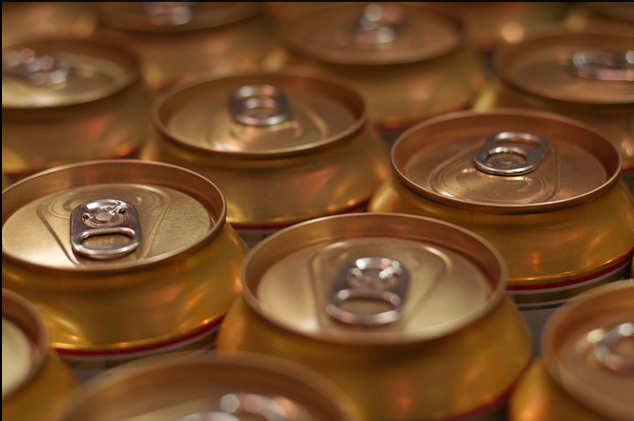 |
| Image courtesy greencolander. |
Or, why can’t I buy Dogfish Head’s 120 Minute IPA in Alabama?
States and local governments can regulate alcohol because they have police power to regulate the health, safety, and welfare of their citizens. State liquor laws are quirky and vary widely, and include:
- Who can buy alcohol (18 year olds or 21 year olds*–as of 1988, everywhere but Puerto Rico and the U.S. Virgin Islands has a minimum purchase age of 21)
- What alcohol can be sold (i.e. 3.2 beer only, or only beer under a certain ABV)
- When alcohol can be purchased (i.e. not after 8 p.m., not on Sunday, not on Election Day)
- Where alcohol can be purchased (i.e. grocery store, liquor store, state-run store only)
- How alcohol can be purchased (i.e., no happy hours, must be ordered with food)
* But the law can’t treat men and women differently. Oklahoma found this out the hard way when the United States Supreme Court struck down the Oklahoma law that allowed women but not men to purchase 3.2 beer between the ages of 18 and 21. Incidentally, this case — Craig v. Boren — gave us the intermediate scrutiny test for gender discrimination.
These laws can be tough to change, since legislators are often reluctant to appear soft on laws that regulate “vice.” However, as microbreweries grow in economic importance, many state legislatures are now moving to relax their liquor laws.
Someday, even Alabamans may enjoy a 20% ABV 120 Minute IPA.
For more:
- Why a Limit on ABV?, Beer America TV, YouTube
- Craig v. Boren, 429 U.S. 190 (1976) (Oyez Project)
- M.J. Stephy, America’s Alcohol Laws: Quirky Rules Across 50 States, TIME, July 9, 2009
- Michael Cooper, Utah’s Liquor Laws – Relaxed, but Still Peculiar, NY Times, July 19, 2011
- Alcohol laws of the United States – Table, Wikipedia
- Anna Sloan Walker, History of the Liquor Laws of the State of Washington, Washington Historical Quarterly (1914)
- Ethan P. Davis, Liquor Laws and Constitutional Conventions: A Legal History of the Twenty-first Amendment, Yale Law School Student Scholarship Paper 65, 2008.
- The Code of Federal Regulations (27 CFR § 5.37 Alcohol content) requires liquor labels to state the percentage ABV, and § 5.22 defines types of alcohol in part by alcohol content/proof (maybe the most exciting regulation I’ve ever read).
- Sunday Blue Laws Blog, see also David N. Laband, Deborah Hendry Heinbuch, Blue Laws: The History, Economics, and Politics of Sunday-closing Laws (on Google Books)
- Brian Arola, In push for looser laws, local breweries unite, Minnesota Daily (Apr. 9, 2013)
 The Law in Life