
 |
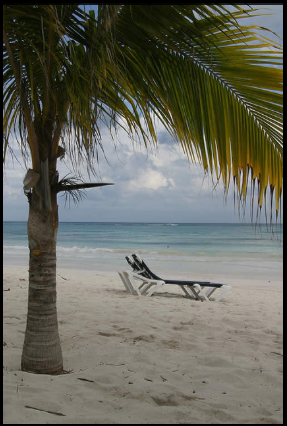
| Image courtesy Andrew Osterberg. |
What?
Free beaches are, sadly, not the norm.
California is a special place. The state constitution even carves out a public right to access beaches:
No individual, partnership, or corporation, claiming or possessing the frontage or tidal lands. . . shall be permitted to exclude the right of way to such water . . . so that access to the navigable waters of this State shall always be attainable for the people thereof.
Article X, Sec. 4.
California Proposition 20–and four years later, the 1976 California Coastal Commission Act–set up the California Coastal Commission, a state agency charged with protecting the state’s coastline. Part of its mission is to ensure public access for recreation.
According to Molly Selvin, Associate Dean for Interdisciplinary Programs at Southwestern Law School, the “public trust” doctrine underpinning these laws is what has kept California beaches open to the public.
What is the dividing line? Wet sand and dry sand! California law carves out the land below the median high tide line as public.
For more:
- Why California’s Beaches are Open to Everyone, Laws that Shaped LA, KCET
- How Beaches Work: Recreation and Preservation, Coastal Clash, KQED
- Molly Selvin, This Tender and Delicate Business: The Public Trust Doctrine in American Law and Economic Policy, 1789-1920. New York : Garland Pub., 1987 (originally presented as doctoral thesis); see also article under same title at 1980 Wis. L. Rev. 1403.
- The California Coastal Commission
- PUBLIC RESOURCES CODE DIVISION 20 CALIFORNIA COASTAL ACT (2013)
- Katherine Ellison, Leading the Coastal Commission for 25 Years, a Crusader and Lightning Rod, The New York Times (May 8, 2010).
 The Law in Life